

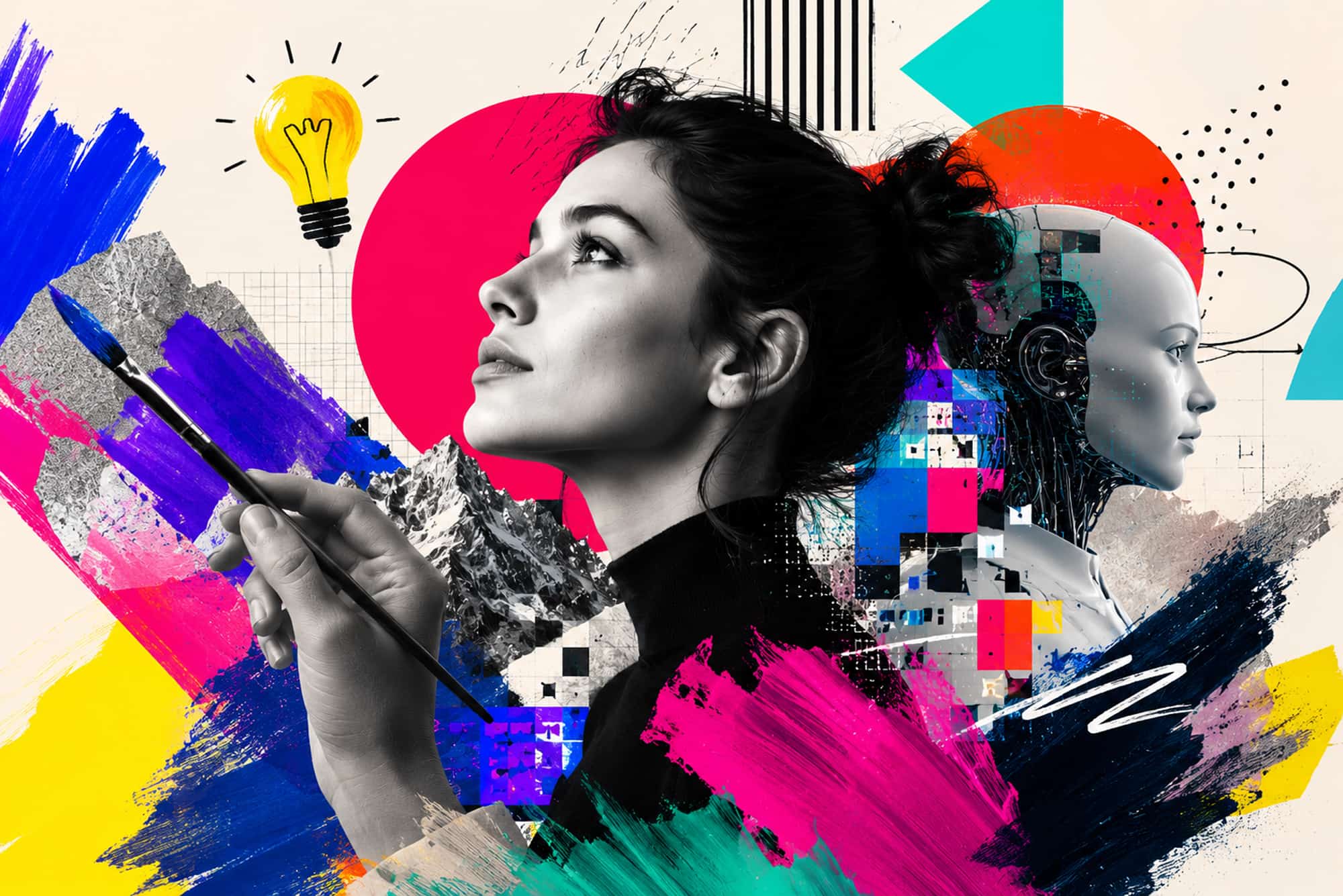
There’s a word making its way around marketing circles right now that you need to know: slop.
Slop is the term increasingly used to describe the flood of low-effort, AI-generated content washing over the internet: content that is technically competent, grammatically correct, informative enough, and utterly, completely forgettable. Mentions of the word in marketing conversations grew by over 200% in 2025. Which tells you people notice. Audiences notice. And they’re already tuning it out.
This is actually great news if you’re willing to act on it.
The Homogenization Problem
Here’s what happened. AI tools lowered the barrier to content creation to almost zero. Anyone can now generate a blog post, a social caption, a product description, or an ad headline in seconds. And a lot of people are doing exactly that, at enormous scale, without asking whether the output is any good or whether it sounds like them.
The result is a marketing landscape that’s never been more crowded or more same-y. Every niche has a hundred brands saying the same things in the same tone with the same structure. The words are different but the feeling is identical: polished, generic, and absent of any real personality.
For brands that have done the work to know who they are, have a genuine voice, a distinctive point of view, and a personality that comes through in everything they make, this is a historic opportunity. Because when everything else blurs into the same beige noise, anything real stands out like a flare.
What AI Can and Can’t Do
Let’s be clear: AI is a genuinely powerful tool. It can accelerate research, generate options, surface ideas, help with structure, and handle a lot of the mechanical work that used to slow creative teams down. Used well, it makes good creative teams faster without making them worse.
What AI cannot do — at least not yet, and arguably not in the way that matters — is originate. It doesn’t have conviction. It doesn’t have a lived perspective. It doesn’t know what your brand has been through, what your clients feel when they work with you, or what your team believes that the rest of your industry is getting wrong. It can approximate a voice, but it can’t be a voice.
That distinction is where human creativity lives, and it’s precisely what your audience is hungering for.
The Premium on Authenticity
In 2026, the most overused word in marketing may be “authentic.” But strip away the buzzword and there’s something real underneath it. People want to work with, buy from, and follow brands that feel like they’re run by actual humans who have opinions, make choices, take stances, and care about something beyond the transaction.
The brands winning right now are the ones that are willing to be specific. Specific in their point of view. Specific in their humor. Specific in what they’re willing to say that makes some people uncomfortable. Specific about what they believe.
That specificity is the antidote to slop. You can’t replicate it with a prompt. You have to earn it by knowing yourself and then being willing to put it out into the world, even when safe and generic would have been easier.
What This Means for Your Brand
If you’re using AI to create content (and there’s nothing wrong with that!) the question to ask is whether you’re using it to scale your voice or to replace it. Are you feeding it with the real substance of your brand — your distinct personality, your actual beliefs, your clients’ specific stories — or are you letting it fill the void with something that sounds professional but says nothing?
The brands that will win the next five years of marketing are the ones that produce the most “unmistakably them” content. The ones whose audience can read a post without seeing the logo and still know exactly who wrote it.
—
Want to build a brand voice that no algorithm can replicate? Let’s talk: https://www.colouroutside.com/contact