

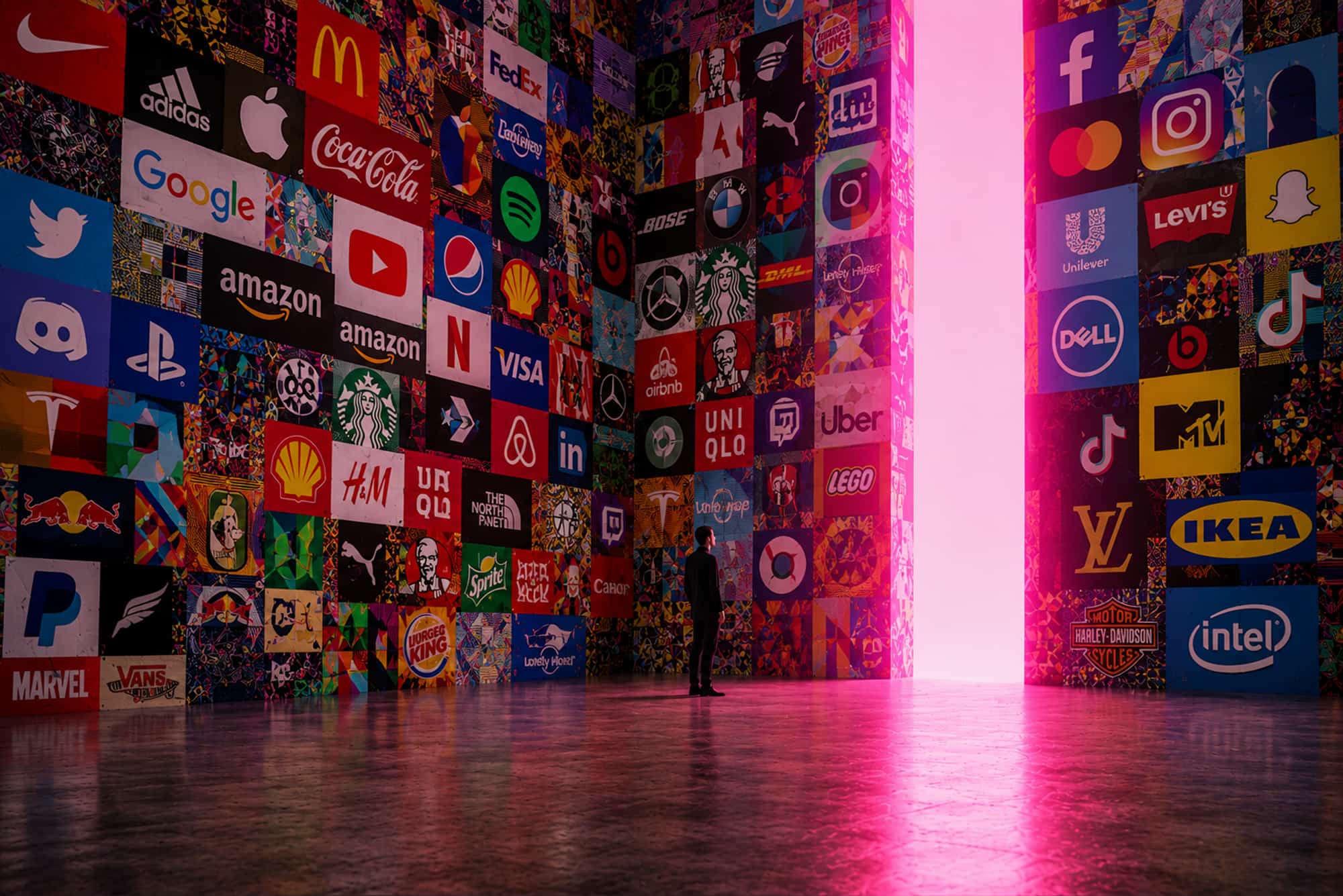
There’s a difference between being loud and being memorable. A lot of brands haven’t figured that out yet.
We live in the noisiest marketing environment in history. Every brand is posting, boosting, targeting, and optimizing. Every competitor has a website, a social presence, and a carefully crafted “About Us” page that says something about being “passionate” and “customer-focused.” And somehow, despite all that activity, most of them fade into exactly the same gray background they were trying to escape.
So here’s the uncomfortable question: Is your brand actually differentiated? Or are you just making more noise than the person next to you?
Differentiation Isn’t a Design Choice
Here’s where a lot of brands go wrong. They invest in a new logo, refresh the website, pick better fonts, and call it differentiation. Visuals matter — we’ll be the first to defend them. But if you strip away the design, is there still something underneath that no one else is saying? Something no one else is?
Real differentiation lives at the intersection of who you genuinely are and what your audience genuinely needs. It’s not manufactured. It’s excavated. You don’t invent it – you uncover it, sharpen it, and then relentlessly commit to it across every single touchpoint.
Marty Neumeier, one of the sharpest minds in branding, put it plainly: “A brand is a person’s gut feeling about a product, service, or organization.” You can’t control that feeling entirely. But you can earn it. And earning it starts with knowing, with real clarity, what makes you different – not just better.
The Sameness Trap
AI has made the sameness problem significantly worse. The internet is now saturated with content that sounds competent, professional, and completely interchangeable. Scroll through LinkedIn on any given morning and you’ll find fifteen posts that make the same three points about leadership, wrapped in the same slightly-too-optimistic tone.
That’s not marketing. That’s wallpaper.
When everything looks and sounds the same, differentiation is survival. Your audience is more sophisticated than ever. They’re tuning out anything that doesn’t feel specific, genuine, or earned. The brands breaking through right now aren’t the ones spending the most. They’re the ones who are clearest about who they are and most committed to expressing it.
Three Questions That Cut Through The Noise
If you’re not sure whether your brand is truly differentiated, start here:
- Can you finish this sentence without using the word “quality”?
“We’re different from our competitors because ___________.”
If your answer involves words like “quality,” “passion,” “dedicated,” or “innovative,” you’re not differentiated. You’re describing what every brand claims. Try again. Dig deeper. Get specific.
- Would your best customer recognize your brand in a blind test?
Pull your most recent social post, your latest email, a page from your website. Now strip off the logo and the name. Does it still sound unmistakably like you? Or could it belong to any of your competitors?
- What would your audience lose if you disappeared tomorrow?
This is the sharp one. If the honest answer is “not much, they’d just go elsewhere,” that’s not a brand problem — it’s a positioning problem. And positioning is fixable, but only if you’re willing to be honest about it first.
Differentiation Is a Decision, Not an Accident
Here’s the thing nobody tells you: real brand differentiation requires saying no. A lot. It means being bold enough to stand for something specific, even if that means not appealing to everyone. It means resisting the urge to chase every trend, copy what’s working for your competitor, or soften your edges so you don’t offend anyone.
The most memorable brands — the ones that build loyalty, command premium pricing, and generate word-of-mouth without a massive ad budget — all made a choice. They decided to own something. A point of view. A specific audience. A style. A standard. And then they held onto it, even when it was uncomfortable.
Disrupting the gray isn’t just a tagline. It’s a strategy. The gray is crowded. The gray is safe. The gray is forgettable. And if your brand is living there right now, no amount of ad spend is going to save it.
The good news? You have more canvas than you realize. You just have to be willing to colour outside the lines.
—
Ready to figure out what makes your brand genuinely different? Let’s talk: https://www.colouroutside.com/contact